The problem with feature-driven roadmaps
Startups often compete by shipping more features faster. This leads to parity rather than differentiation.
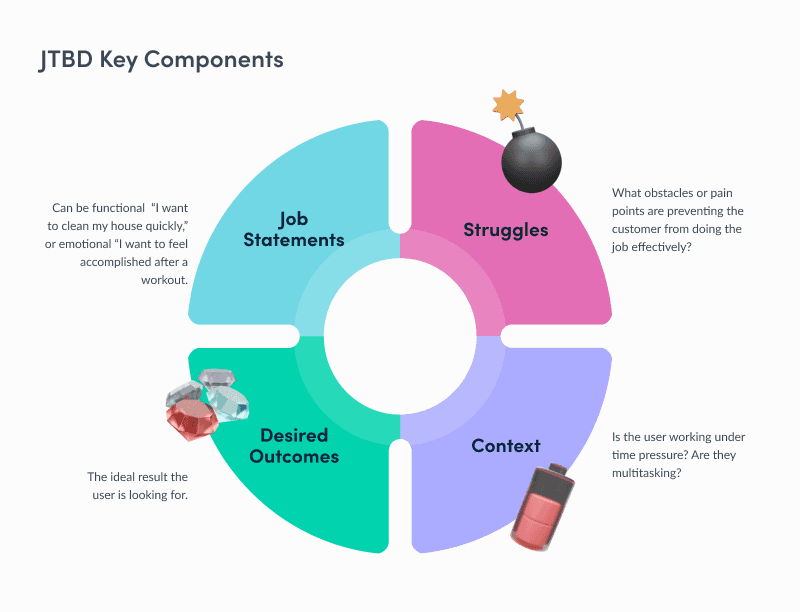
Clayton Christensen’s Competing Against Luck introduced the Jobs to Be Done framework to shift focus from product attributes to user progress.
Understanding the job
A job is not a task. It is a desired transformation in a user’s situation.
For example:
Users don’t buy productivity tools. They hire them to feel in control of complexity.
Strategic leverage
When teams identify core jobs, they unlock:
clearer positioning
roadmap prioritization clarity
narrative alignment across marketing and product
Lenny Rachitsky frequently discusses this in Lenny’s Podcast, highlighting how early-stage startups achieve traction through job clarity.
Product design impact
Jobs framing influences:
onboarding narratives
feature bundling decisions
success metrics definition
Takeaway
Jobs to Be Done is not a research method. It is a strategic lens that reframes product competition around user progress rather than functionality.