Most design systems fail for the same reason
They focus on components instead of decisions.
Buttons, inputs, cards… all neatly organized.
But when teams face real product questions, the system goes silent.
Should this be a modal or a page?
When do we prioritize speed over clarity?
How should this behave across platforms?
A UI library doesn’t answer these.
A system should.
The hidden layer: decision-making
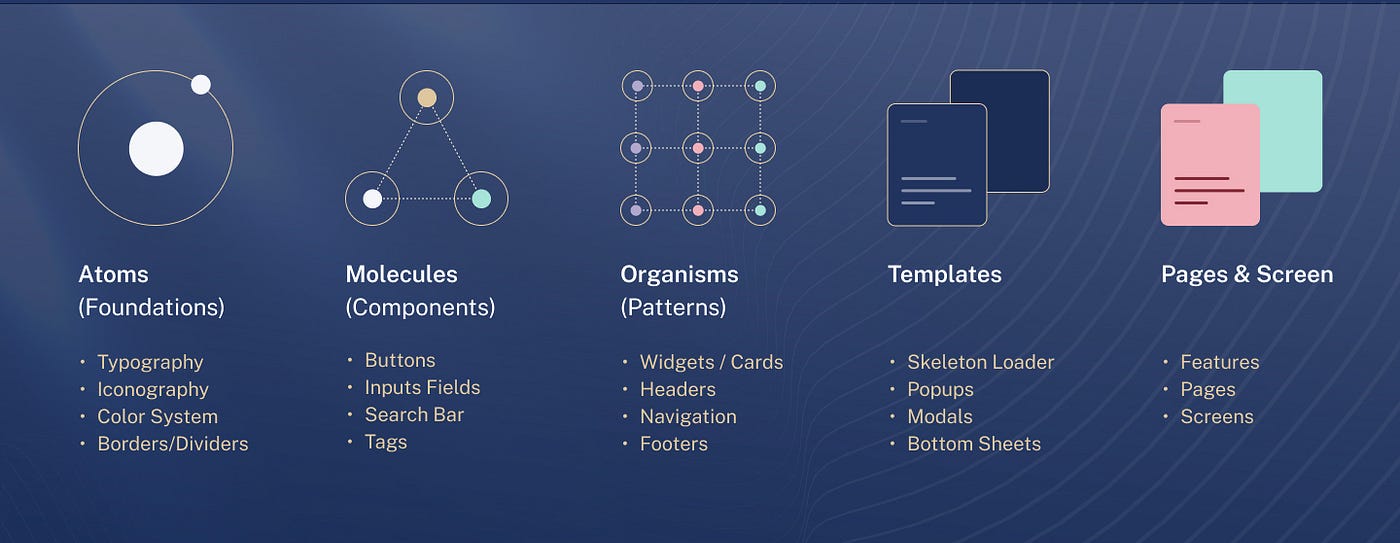
Brad Frost’s atomic design model explains how interfaces scale structurally.
But structure alone doesn’t scale thinking.
In practice, product teams deal with:
trade-offs
constraints
competing priorities
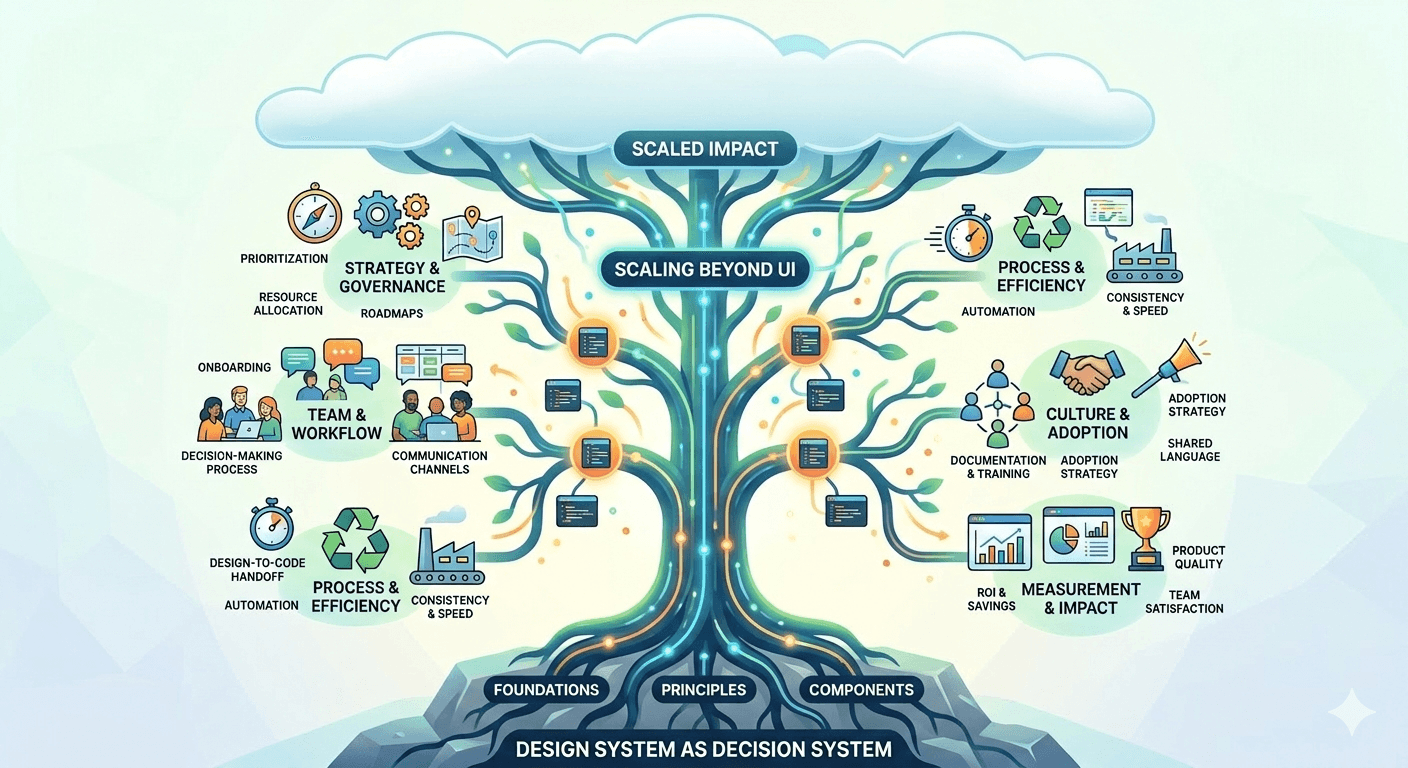
Design systems become truly valuable when they guide how decisions are made, not just what gets built.
From components to principles
Strong systems extend beyond assets into principles.
Principles act as decision shortcuts.
For example:
Prioritize clarity over density
Prefer progressive disclosure over overload
Default to consistency before customization
These principles reduce debate and align teams faster.
Don Norman’s principles of usability emphasize consistency and feedback, but systems operationalize them at scale.
Patterns as encoded decisions
Patterns are where systems become practical.
A pattern is not just a reusable UI.
It is a pre-decided solution to a recurring problem.
Examples:
onboarding flows
empty states
error handling
navigation structures
Each pattern answers:
“What should we do in this situation?”
Without patterns, teams reinvent decisions every time.
Governance is part of the system
Many design systems fail not because of design quality, but because of lack of governance.
Questions every system must answer:
Who decides what enters the system?
How are updates managed?
How do teams contribute?
Nathan Curtis often highlights that systems succeed when they are treated as products, not side projects.
A system without ownership becomes outdated quickly.
The business impact of decision systems
When design systems guide decisions, organizations gain:
faster product development
reduced inconsistency
clearer cross-team communication
more predictable outcomes
The real ROI is not visual consistency.
It is operational clarity.
The shift product teams need to make
Instead of asking:
“Do we have a design system?”
Teams should ask:
“Does our system help us make better decisions faster?”
That is the difference between:
a UI kit
and a scalable product system
Takeaway
Design systems are not just design tools.
They are decision systems that encode knowledge, align teams, and scale product thinking across organizations.
If your system only defines components, it solves for consistency.
If it defines decisions, it solves for scale.